The storefront that stopped waiting.
In three weeks, Shotgun shipped about 120 storefront changes, the kind of list an agency would stretch across three to four months, spanning every layer of the site: content, product pages, data, apps, campaigns, speed and SEO.
Every change meant finding a developer.
Nori is a small, founder-led team. And a Shopify storefront is never finished: a badge to add, a page that loads slow, a campaign that needs to go live, a product layout that isn't converting. Something always needs doing.
Every one of those used to mean the same thing. Find a developer or an agency, write a brief, wait in a queue, review, send it back. So the small things piled up, the bigger things slipped, and the founder became the bottleneck for her own website.
About 120 tasks. Three weeks.
Not tweaks. Real storefront engineering across content, product pages, product data, apps and campaigns. Briefed and queued through a freelancer or agency one at a time, the same list is realistically three to four months of waiting. Here is some of what shipped.
The product gallery, rebuilt as a real carousel
Nori's product images sat in a plain stack. Shotgun rebuilt the gallery as a true carousel: swipe gestures, arrow controls, full keyboard navigation, and a lightbox that stays in sync with the main image as you move through it.
"Complete the Set", curated by the team
A recommendation carousel on every product page, wired to Shopify's own complementary-products setting. Nori curates exactly what shows, per product, by drag-and-drop in the Shopify admin. No code, full control.
A return badge that reads the product
A return-window badge on every product page that reads the product type and shows the right policy by itself: 100 days for luggage, 30 for everything else. No manual tagging, nothing to keep in sync.
Product data, cleaned across 18 SKUs
Specifications rebuilt across every bundle SKU, the Set of 4, 5 and 6. Dimensions normalised to one consistent format across the whole site, and weight pulled out cleanly from dimensions on 18 bundle products. Slow, exacting work.
A press section for the homepage and About
"Hot off the Press", a press section built into the homepage and the About page: six publications, from VC Circle to Silicon India, each with an editorial pull-quote.
Twenty-two blog posts, draft to live
Twenty-two posts taken end to end onto the Traveller's Notes blog: drafted, copy cleaned, images placed, published. Plus a long-form ingredient feature, and a returns policy rewritten from scratch.
And more on top: a sticky add-to-cart bar, an announcement-bar flicker fixed, the review widget restyled, the WhatsApp button repositioned, wheels renamed across the whole store, a Mother's Day collection page.
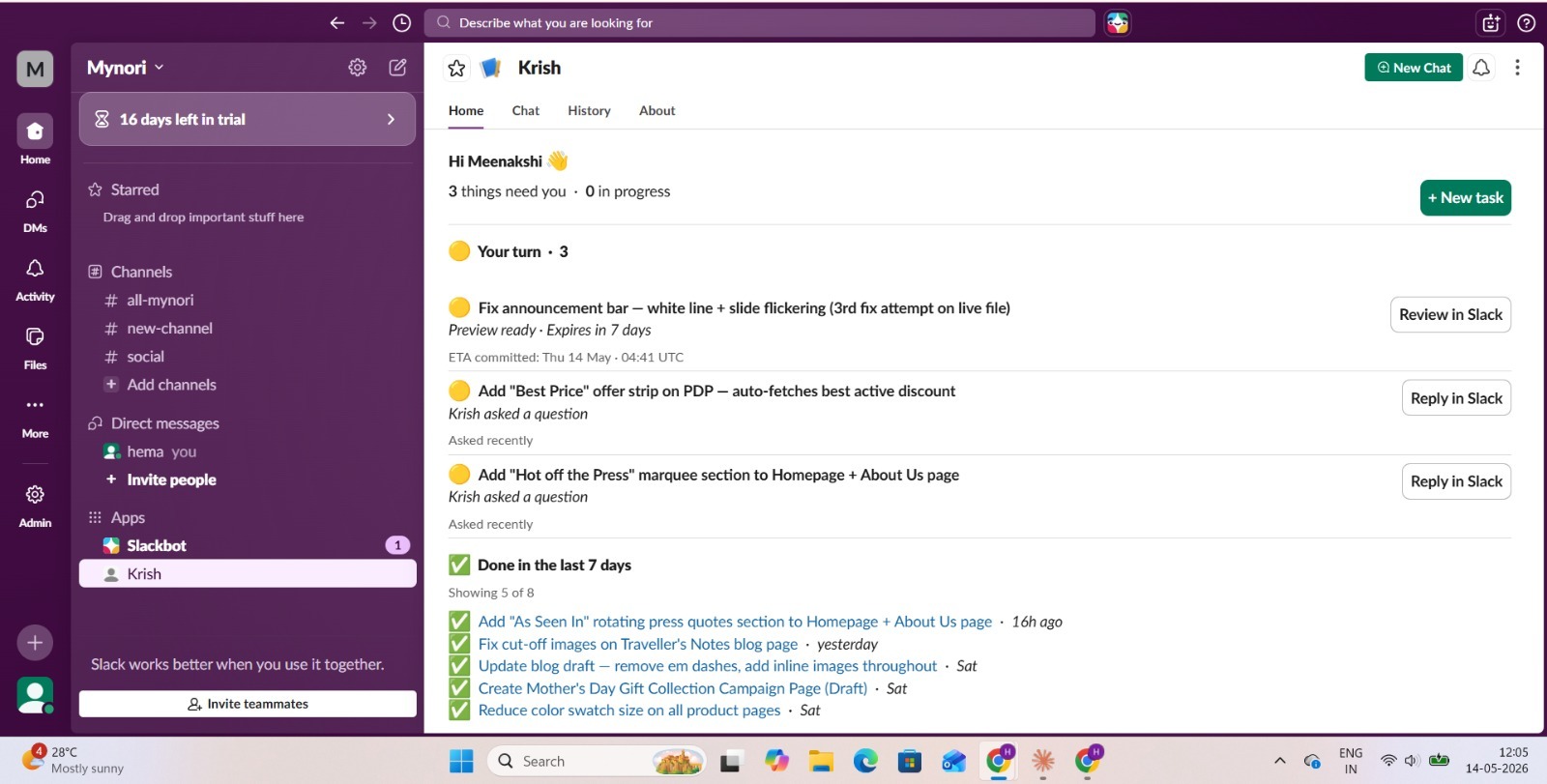
A few of the asks, in her own words
"Create a Summer Favourites collection, add three products, put a homepage banner linking to it, and a 15% code for that collection. Expires May 10, once per customer, minimum cart ₹2,000."
"Add a 'Complete the Set' carousel on every product page that I can curate myself, per product, from the Shopify admin."
"Put a returns badge on every product page that shows 100 days for luggage and 30 for everything else, automatically."
"Create a Shipping & Returns page, write the policy, and add it to the footer."
From brief to live. One message in Slack: "when someone adds the Cabin Wheelie, in any of its three colours, show a free-gift banner in the cart, and take it away on its own if they remove the bag."
What shipped was a cart that knows what's in it. Add any Cabin Wheelie colourway and the checkout drawer surfaces the gift; pull it out and the banner clears itself. Built and tested on mobile and desktop, wired to the live campaign. A developer scopes this as four to five days, briefed and queued. Shotgun shipped it in about two hours, with a preview to approve before it touched the live site.
The website became a growth engine.
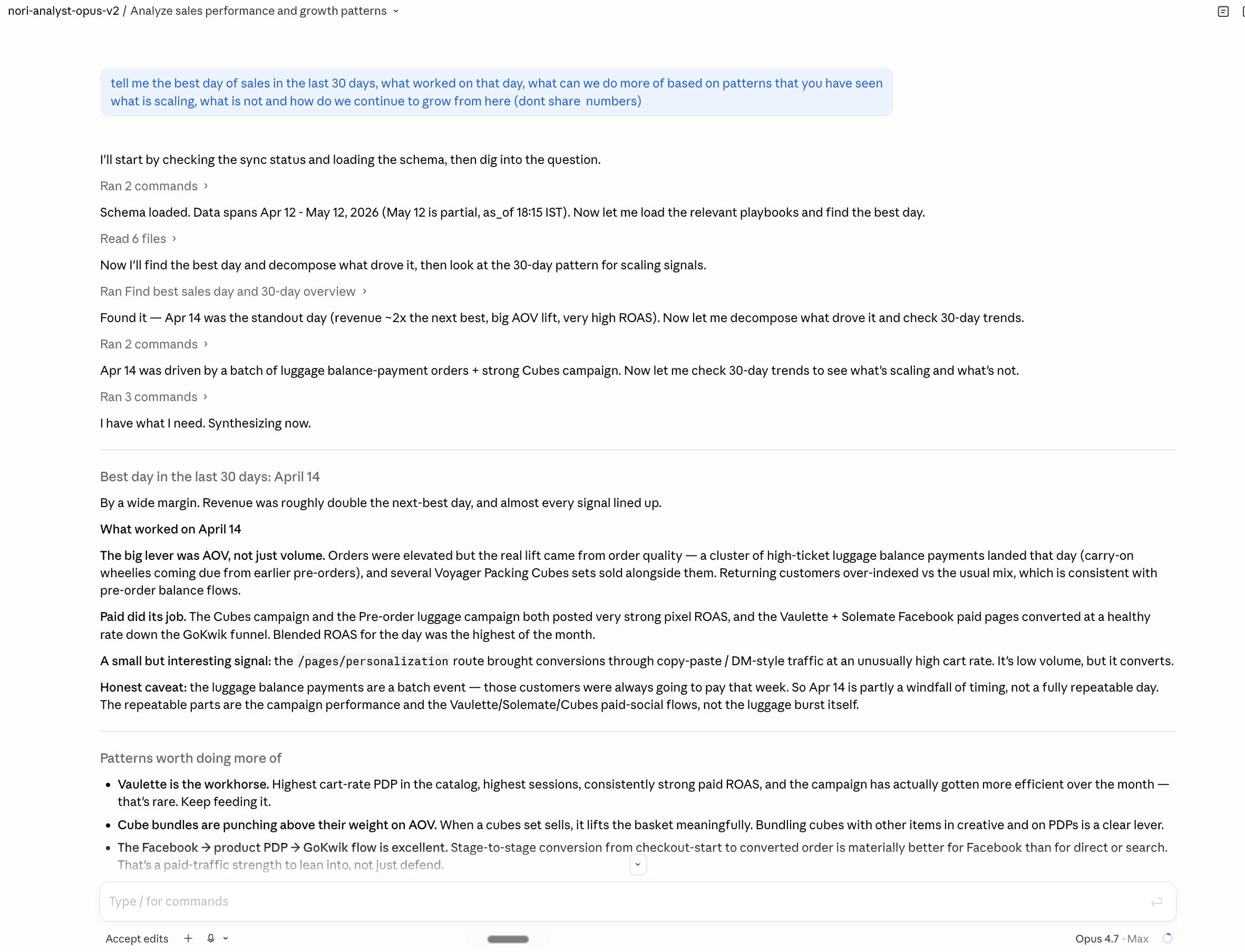
A storefront should be a brand's growth engine. For Nori, it had quietly become a dependency instead. Every change waited on an agency, and that wait taught the team to play it safe: fewer experiments, smaller bets, only the work clearly worth the hold-up.
Now the website moves as fast as the team can think, across every layer: speed, UX, SEO, merchandising. They respond to what customers need the day they notice it, and run far more experiments, because each one is cheap to try and quick to learn from. Faster iteration drives growth, growth makes room for more iteration, and the storefront that used to hold Nori back has started to compound.