April 1, 2026•27 min read•Alternatives & Comparisons
Krish vs hiring a Shopify freelancer — full comparison
Compare Krish's on-demand Shopify service vs hiring freelancers. Cost, speed, quality analysis to help DTC brands choose the right development approach.
Krish vs Shopify Freelancer: Full Comparison Guide 2026
TL;DR
This guide breaks down Krish vs Shopify freelancer with practical implementation steps, common risks, and the fastest path to measurable Shopify improvements.
The Shopify development market presents DTC brands with limited options that force uncomfortable trade-offs.
The cost of a freelance Shopify developer is usually the lowest option, but risks include limited availability, single-skill dependency, and slower turnaround when the freelancer manages multiple clients simultaneously.
Freelancer Market Overview
The median hourly rate for Shopify Developers is $20, with hourly rates on Upwork typically ranging between $15 and $29. However, this baseline pricing creates a false economy.
You could pay $15 an hour or $200, spend $800 on a theme tweak or $80,000 on a full custom build.
The geographical spread creates significant pricing disparities.
North American rates (USA, Canada) typically range from $50-$150 per hour, with top experts exceeding $200, European rates in Western Europe (UK, Germany) are often $40-$150 per hour, while Eastern Europe offers more competitive rates ($20-$80 per hour), and Asian rates (India, Philippines) are often the most budget-friendly, from $15-$45 per hour.
Agency Pricing Reality
Agency costs reflect their overhead structure and team-based approach.
A simple theme-based store typically costs between $7,000 and $25,000, a more complex custom Shopify build ranges from $25,000 to $100,000, and enterprise-level Shopify Plus projects with custom integrations and advanced functionality can range from $75,000 to $200,000 or more.
Ongoing support and maintenance retainers typically run from $700 to $7,000 per month depending on the level of service. This creates a significant barrier for growing businesses that need professional development but lack enterprise budgets.
The Middle Ground Problem
It's not always about price, it's about who actually knows Shopify, not just how to write code. The market gap exists between affordable but risky freelancers and expensive but comprehensive agencies. This middle ground is where subscription-based models like Krish position themselves.
Expand details: Shopify Development Cost Spectrum 2026
Krish operates as a subscription-based Shopify development service that combines the accessibility of freelancer pricing with the reliability of agency infrastructure. For $1,000 per month, clients receive unlimited tasks with human verification and 30-minute to 24-hour turnaround times.
How Krish Works
The service model breaks traditional project boundaries by offering continuous development capacity. Unlike freelancers who juggle multiple clients or agencies that require minimum project commitments, Krish provides dedicated team access through a flat monthly subscription.
How Krish's dedicated team works involves task-based workflows where clients submit development requests through a managed system. Each task receives human verification before completion, ensuring quality control without the overhead of traditional project management structures.
The technical implementation focuses on common Shopify needs: theme customization, app integration, performance optimization, and conversion rate improvements. This specialization allows for faster completion times compared to generalist developers.
Subscription vs Project-Based Pricing
Traditional project-based pricing creates unpredictable costs.
A simple store setup (theme install, branding tweaks, 4-5 pages): $1,000–$2,500, Custom theme design + build with app integrations: $3,000–$6,000, Complex builds (subscriptions, custom logic, headless elements): $7,500–$15,000.
Krish's pricing structure eliminates budget uncertainty by providing fixed monthly costs regardless of task complexity or volume. This predictability enables better cash flow management for growing businesses.
The subscription model particularly benefits businesses with ongoing development needs. Instead of initiating new projects for each improvement, brands can continuously optimize their stores without renegotiating contracts or managing multiple vendor relationships.
Team Structure and Capabilities
Unlike individual freelancers, Krish maintains a team structure that prevents single-point-of-failure risks. The human verification process ensures consistency across different team members while maintaining the speed advantages of dedicated resources.
The team specializes in Shopify's technical requirements: Liquid templating, JavaScript customizations, app integrations, and theme optimization. This focused expertise contrasts with freelancers who may work across multiple platforms or agencies that dilute Shopify knowledge across various services.
Baymard Institute ecommerce UX research
Source: baymard.com · Captured: Apr 1, 2026
Shopify Freelancers: The Solo Developer Approach
Shopify freelancers represent the most accessible entry point for store development, but come with inherent limitations that scale poorly with business growth.
A Shopify freelancer is an independent professional who offers services such as Shopify store setup, custom theme development, and minor fixes, typically working alone and hired on a project basis, operating independently and often handling all aspects of their business, from client communication to project execution.
Types of Shopify Freelancers
The freelancer market segments into distinct skill levels and specializations.
Expert Shopify Developers charge $90 per hour, representing the premium tier of independent contractors.
Specialist freelancers focus on specific aspects of Shopify development.
Their services are usually specialized, focusing on particular aspects of Shopify development. A freelancer may be an expert in store setup and configuration, helping businesses establish their online presence, while others concentrate on theme customization or development, making aesthetic and functional adjustments to enhance a store's user experience.
Platform freelancers work through services like Upwork and Fiverr, often competing on price rather than specialization.
A contractor who is still in the process of building a client base may price their Shopify developer services more competitively.
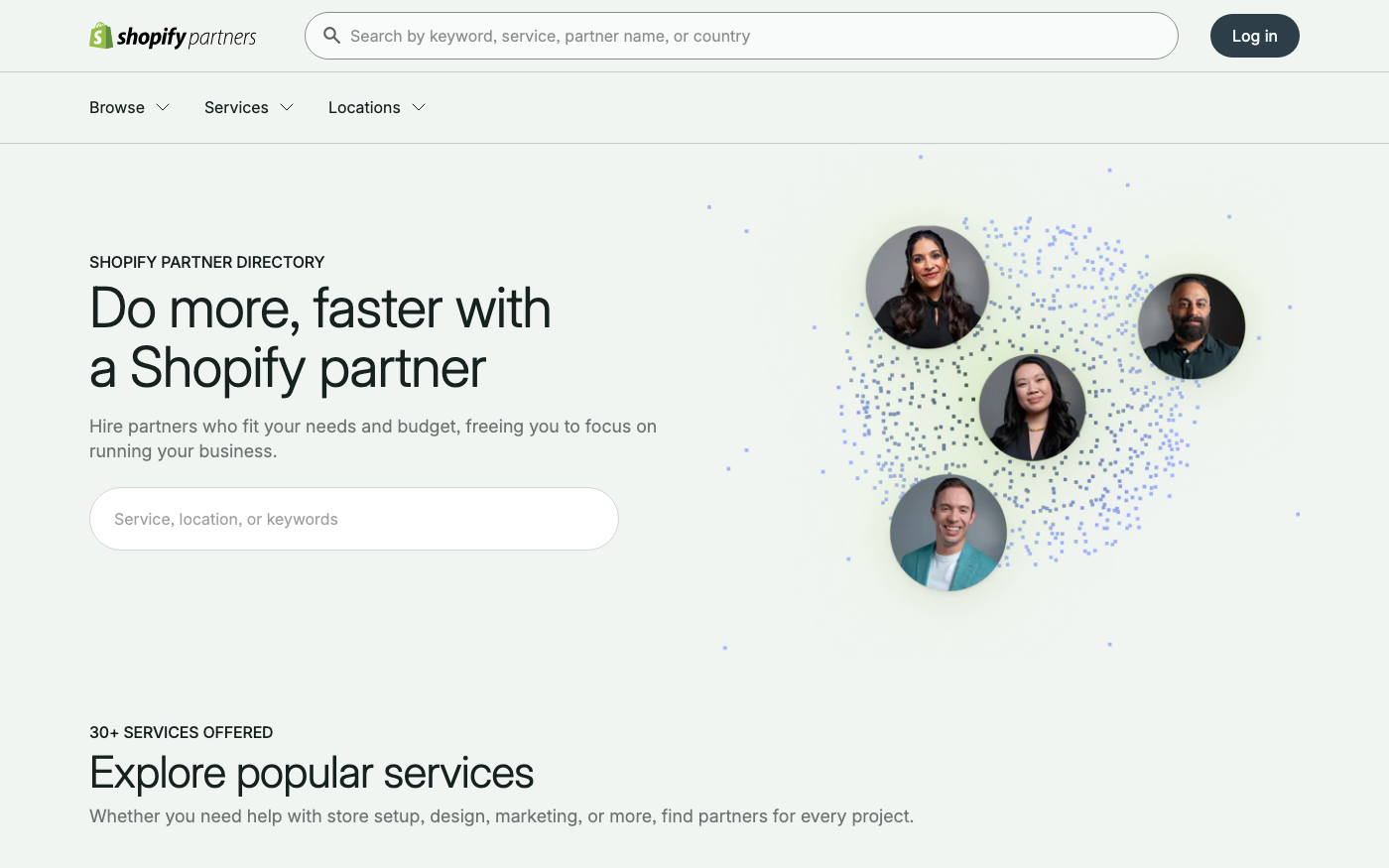
Certified experts from the Shopify Partners Directory command premium rates due to official platform recognition and proven track records.
Typical Pricing Models
Freelancer pricing varies significantly based on geography, experience, and project complexity.
Hourly rates can range from $15 for beginners to $95 for experts, with project-based pricing spanning from $500 to $20,000 or more, depending on the services required.
The hourly model creates cost uncertainty for buyers.
Rush work means the developer has to rearrange their schedule or work nights. That premium is real—usually 20–40% on top of standard rates.
Project-based pricing offers more predictability but requires clear scope definition.
For more complex services, such as developing custom apps or integrating third-party systems, fees can go from $2,000 to $10,000 or more.
Expand details: Freelancer Tier · Hourly Rate · Project Range
Freelancer Tier
Hourly Rate
Project Range
Typical Services
Beginner
$15-$25
$500-$2,000
Basic setup, theme installation
Intermediate
$30-$60
$2,000-$8,000
Custom themes, app integration
Expert
$70-$150+
$5,000-$25,000+
Complex builds, enterprise features
Project Management Reality
Working with freelancers requires significant project management overhead from the client.
Limited Resources – A single person can only handle so much, which may be a challenge for larger or complex projects. Availability Issues – Since freelancers often juggle multiple clients, they may not always be available when you need them.
Communication operates on the freelancer's schedule and availability.
Freelancers can offer short turnaround times if readily obtainable. However, they may have inconsistent workloads. Agencies follow designated workflows, assuring constant improvement.
The single-person dependency creates project continuity risks.
You're relying on one person. If they get busy, ill, or disappear, your project stalls.
Quality Control Challenges
Without formal quality assurance processes, freelancer work quality depends entirely on individual capabilities and attention to detail.
I've hired amazing freelancers for $60/hour who worked faster than $150/hour agency developers, but this requires careful vetting and often involves trial-and-error.
The lack of standardized processes means inconsistent deliverables. Shopify theme development best practices may or may not be followed, depending on the freelancer's knowledge and experience.
Code quality varies significantly without peer review or internal quality standards. Technical debt accumulates when freelancers prioritize speed over maintainable code structure.
"The challenge with freelancers isn't their technical ability—many are excellent. It's the lack of systems around them. Without project management, quality assurance, and backup resources, you're betting your business on one person's availability and attention to detail." — Sarah Chen, E-commerce Director at ModernRetail Co.
Google Search Central documentation
Source: developers.google.com · Captured: Apr 1, 2026
Head-to-Head Comparison: Cost Analysis
The true cost comparison between Krish and freelancers extends far beyond hourly rates to include hidden expenses, opportunity costs, and long-term value considerations. Understanding these factors reveals why subscription models often deliver better ROI despite appearing more expensive upfront.
Upfront Costs
Freelancer costs appear transparent but include numerous variables.
The cost of a Shopify developer is usually between $25 to $160 per hour, based on the level of experience and area. Complex architecture, integrations, and enterprise-level projects usually cost senior Shopify Plus developers $120-200/hr.
For a typical store customization project requiring 40 hours of development work:
Budget freelancer ($30/hour): $1,200
Experienced freelancer ($75/hour): $3,000
Expert freelancer ($120/hour): $4,800
Krish subscription (monthly): $1,000
However,
Small projects usually require 5–40 developer hours, while ongoing optimization needs continue indefinitely.
Certain things seriously impact your quote, such as: Custom design work: Not just choosing fonts, full UI/UX from scratch, Custom apps or features: Anything beyond what Shopify or an existing app can do, Tight deadlines: Need it done next week? That'll cost you. Meetings: More meetings = more hours = more dollars. That's just math.
Project management overhead represents a significant hidden cost. Client time spent coordinating, reviewing, and managing freelancer communication often exceeds 10-15 hours per project. At $100/hour internal valuation, this adds $1,000-$1,500 in opportunity costs.
Revision cycles compound expenses.
If something changes mid-project (because it always does), the conversation is straightforward: here's the new scope, here's what it'll cost. No drama describes the ideal scenario, but reality often involves scope creep and unexpected charges.
Quality assurance gaps create downstream costs. Without formal testing processes, freelancer deliverables may require additional debugging, performance optimization, or compliance fixes that surface weeks or months later.
Long-term Value
The subscription model's value becomes apparent with ongoing development needs. Growing e-commerce businesses typically require:
Monthly theme updates and optimizations
Seasonal campaign implementations
App integration maintenance
Performance monitoring and improvements
Mobile responsiveness updates
A typical growing business averages 15-25 development hours monthly across these activities. At $75/hour freelancer rates, this totals $1,125-$1,875 monthly—already exceeding Krish's $1,000 subscription before factoring in project management overhead.
Return on investment calculations must account for business impact, not just development costs. Shopify theme customization improvements typically generate 15-25% conversion rate increases when properly implemented.
For a business generating $50,000 monthly revenue:
The consistency and speed of subscription-based improvements enable more frequent optimization cycles, compounding improvement effects over time.
Cost Factor
Freelancer
Krish Subscription
Hourly Development
$25-$200/hour
Included
Project Management
Client responsibility
Included
Quality Assurance
Varies by freelancer
Standardized process
Revision Cycles
Additional charges
Included
Emergency Support
Premium rates
Standard service
Long-term Partnership
Contract renegotiation
Continuous service
Speed and Turnaround Times
Time-to-market advantages often determine e-commerce success, making development speed a crucial comparison factor between Krish and freelancers.
Agencies often stick to tight schedules due to established processes, while freelancers might offer quicker turnarounds for smaller tasks.
Initial Setup Time
Project initiation speed varies significantly between freelancers and subscription services. Freelancer engagement requires:
Scope definition and proposal review (3-5 days)
Contract negotiation and signing (2-3 days)
Initial discovery calls and planning (1-2 days)
Total setup time: 6-10 days before development begins
Krish's subscription model eliminates procurement overhead. Task submission occurs immediately after subscription activation, with development beginning within hours rather than days.
A theme-based Shopify store typically takes 4 to 8 weeks. A custom-designed store usually takes 8 to 16 weeks. Complex Shopify Plus builds with extensive integrations can take 12 to 24 weeks. These timelines reflect traditional project-based development approaches.
Freelancers work on a flexible schedule and may take longer for large projects. Agencies can complete projects faster but may require a strict timeline.
Small tasks (theme tweaks, app installations):
Freelancer: 2-7 days depending on availability
Krish: 30 minutes to 4 hours with guaranteed turnaround
Medium projects (custom sections, integration work):
Freelancer: 1-3 weeks with potential delays
Krish: 2-5 days with continuous progress updates
Large builds (complete theme customization):
Freelancer: 3-8 weeks depending on complexity and availability
Krish: Delivered incrementally over 2-4 weeks with daily progress
The subscription model enables parallel task processing rather than sequential project completion, significantly reducing overall timeline requirements.
Revision and Iteration Speed
Revision cycles represent a critical speed differentiator. But the process? Slow. Meetings every week. Long email threads. Two different project managers. There were times we felt like the agency was stretched too thin — and we were the ones pushing to stay on timeline.
Freelancer revision processes often involve:
Formal change request documentation
Scope and cost renegotiation
Schedule adjustment negotiations
Implementation delays during busy periods
Krish's subscription structure treats revisions as standard service delivery. No additional contracts, scope changes, or timeline negotiations slow the revision process.
Turnaround deadline: Needing something done in two weeks instead of six almost always costs more. Rush work means the developer has to rearrange their schedule or work nights. That premium is real—usually 20–40% on top of standard rates.
Freelancer emergency support limitations include:
Availability dependent on current workload
Premium pricing for urgent requests
No guaranteed response times
Single-person dependency risks
Krish maintains dedicated team capacity for emergency requests. The 30-minute to 24-hour response guarantee covers urgent fixes without premium pricing or availability uncertainty.
"We switched from freelancers to Krish after a critical checkout bug during Black Friday took three days to fix because our developer was unavailable. The subscription model gives us confidence that urgent issues get immediate attention." — Marcus Torres, CTO at TechGear Direct
Quality outcomes depend heavily on standardized processes, peer review, and specialized expertise rather than individual developer talent alone.
From an EEAT perspective, expertise and reliability matter more than just price. Ecommerce success depends on performance, user experience, and scalability.
Skill Breadth vs Depth
Freelancer expertise varies from generalists to Shopify specialists.
You also won't get the breadth of expertise (design, development, SEO, strategy) that an agency provides. Individual freelancers may excel in specific areas while lacking comprehensive e-commerce knowledge.
Specialized freelancers offer deep domain expertise but limited scope coverage. A Liquid templating expert may lack UX design knowledge, while a conversion optimization specialist might struggle with technical implementation.
Generalist freelancers provide broader coverage but potentially shallow expertise across disciplines. This creates quality inconsistencies across different aspects of store development.
Krish's team structure combines specialized knowledge with comprehensive coverage. Instead of choosing between breadth and depth, the subscription model provides access to multiple specialists working on the same project.
Code Quality Standards
Professional development requires consistent coding standards and best practices. Shopify theme development best practices provide official guidelines, but enforcement varies significantly among freelancers.
Freelancer code quality depends entirely on individual standards and experience. Without peer review processes, technical debt accumulates through:
Documentation standards for future maintainability
The human verification process includes technical review, not just functional testing, ensuring long-term code maintainability.
Design Consistency
Baymard Institute ecommerce UX research demonstrates that consistent design implementation significantly impacts conversion rates. Freelancer design consistency varies based on individual capabilities and attention to detail.
Design systems implementation requires understanding of component libraries, style guides, and brand consistency principles. Many freelancers focus on individual page development without considering system-wide design implications.
Responsive design quality varies significantly among freelancers. Mobile optimization services require specialized knowledge of device-specific performance considerations and touch interface design principles.
Krish maintains design system knowledge across team members, ensuring consistent implementation regardless of individual developer assignments.
Technical Documentation
Quality development includes comprehensive documentation for future maintenance and team transitions.
A certified Shopify developer often works with Liquid, Shopify's templating language, along with HTML, CSS, JavaScript, and sometimes backend frameworks when building custom apps.
Freelancer documentation practices vary widely:
Some provide excellent technical documentation
Others deliver functional code without explanatory documentation
Knowledge transfer depends on individual communication skills
Documentation gaps create expensive maintenance challenges when freelancers become unavailable or new team members join projects.
"The difference in code quality became apparent six months after our freelancer delivered the project. Without proper documentation or comments, our internal team couldn't efficiently modify the custom features. We spent more fixing and understanding the existing code than the original development cost." — Jennifer Liu, E-commerce Manager at Wellness Brands Inc.
Quality Factor
Freelancer
Krish Team
Code Review
Self-reviewed
Peer-reviewed
Documentation
Inconsistent
Standardized
Design Systems
Individual knowledge
Team standards
Performance Testing
Varies
Required process
Security Scanning
Optional
Mandatory
Mobile Optimization
Skill-dependent
Specialized expertise
Communication and Project Management
Effective communication and project management often determine project success more than technical capabilities, creating significant operational differences between freelancers and subscription services.
Poor communication can derail the entire project before it launches. I've watched six-figure projects collapse not because of technical failures, but because of misaligned expectations, vague timelines, and the agency's inability to communicate clearly under pressure.
Direct vs Managed Communication
Freelancer relationships typically involve direct communication between client and developer.
Freelancers deliver one on one communication, while agencies deliver reliable project managers. This directness offers benefits and drawbacks.
Direct communication advantages:
Immediate access to decision-making developer
No intermediary interpretation of requirements
Faster clarification of technical questions
Personal relationship building
Direct communication challenges:
Developer time spent on non-development activities
Inconsistent availability for client communication
Technical explanations may overwhelm non-technical clients
Single point of failure for project communication
Krish's managed communication structure provides dedicated coordination while maintaining technical accessibility. Clients receive regular updates and progress reports without consuming development time for status meetings.
Project Coordination
Freelancer project coordination depends entirely on individual organizational skills and systems.
Without the backing of a larger team, they manage everything themselves, which allows for a highly personalized approach but also means their capacity is limited.
Coordination challenges with freelancers:
Lack of standardized project tracking systems
Inconsistent update schedules and formats
No backup coordination if freelancer becomes unavailable
Client responsibility for milestone management
They implement clear communication channels, project timelines, and revision cycles to maintain quality and deliver results on schedule describes professional service delivery that varies significantly among individual freelancers.
Subscription models like Krish implement systematic coordination processes:
Standardized task submission and tracking
Regular progress reporting schedules
Clear escalation procedures for urgent issues
Dedicated project coordination roles
Stakeholder Updates
Growing businesses require regular stakeholder communication about development progress.
Client relationships with agencies tend to be more formalized, with multiple touchpoints for support and collaboration. Dedicated account managers or project leads act as liaisons between the business and the development team, ensuring smooth communication and progress tracking.
Freelancer stakeholder communication often becomes informal and inconsistent:
Update frequency depends on freelancer's communication preferences
Progress reporting formats vary by individual
Stakeholder questions may interrupt development workflow
No systematic documentation of decisions and changes
Professional stakeholder management requires dedicated resources and structured processes that individual freelancers typically cannot provide consistently.
Change Request Handling
E-commerce development involves frequent scope adjustments and requirement evolution.
What happens if the project goes over budget or timeline? Understanding how they handle scope changes tells you a lot about how the relationship will work.
Freelancer change management challenges:
Informal change documentation processes
Cost and timeline renegotiation for each adjustment
Potential resistance to scope modifications
Risk of miscommunication about approved changes
The subscription model eliminates change request friction by treating scope adjustments as normal service delivery rather than contract modifications.
"Managing our freelancer relationship required a project manager's attention. Between status updates, change requests, and technical coordination, we realized we were spending 15-20 hours monthly just managing the relationship—time that could have been spent growing the business." — David Park, Operations Director at Fresh Market Co.
Communication Factor
Freelancer
Krish Subscription
Primary Contact
Developer directly
Dedicated coordinator
Update Schedule
Varies by individual
Standardized reporting
Change Process
Contract renegotiation
Standard service delivery
Stakeholder Management
Client responsibility
Professional facilitation
Documentation
Inconsistent
Systematic tracking
Escalation Process
Direct developer contact
Defined escalation paths
Scalability and Growth Considerations
Business growth demands development partnerships that scale efficiently with increasing complexity and volume requirements.
An agency might be better suited for businesses anticipating rapid growth that requires multiple, simultaneous enhancements to their online presence. The scalability comparison between freelancers and subscription services reveals fundamental structural differences.
Handling Increased Workload
Freelancer capacity remains fixed by individual availability and capabilities.
Scalability Issues: For larger projects, a freelancer's limited capacity can hinder your ability to scale and expand your Shopify store. Growing businesses inevitably outpace single-person development capacity.
Workload scaling challenges with freelancers:
Fixed capacity regardless of business growth
Inability to handle parallel development streams
Bottlenecks during peak business periods
Risk of losing freelancer to other clients
Subscription model scalability advantages:
Team capacity adjustment based on demand
Parallel task processing capabilities
Consistent service delivery during growth periods
Dedicated resource allocation for subscribers
As we move into 2026, the demand for customized and high-performance Shopify development services continues to rise among startups and enterprises alike. Whether you're launching your first online store or optimizing an existing one for higher conversions, expert Shopify development services can make all the difference.
Skill Set Evolution
E-commerce technology evolves rapidly, requiring continuous learning and adaptation.
In 2026, AI-powered app development is becoming increasingly popular, offering advanced automation, analytics, and personalization. Individual freelancers face resource constraints for staying current with emerging technologies.
Freelancer skill development limitations:
Personal time investment required for learning
Financial constraints on training and certification
Limited exposure to diverse implementation scenarios
Individual knowledge gaps in specialized areas
Team-based services maintain broader skill coverage and shared learning resources:
Distributed expertise across multiple specialists
Shared investment in team training and development
Cross-pollination of knowledge among team members
Specialized roles for emerging technology areas
Technology Updates
Shopify's platform updates require ongoing adaptation and optimization. Google Search Central documentation provides evolving SEO guidelines that impact e-commerce development practices. Staying current with these changes requires dedicated attention and resources.
Freelancer technology update challenges include:
Individual responsibility for tracking platform changes
Limited time allocation for non-billable learning
Potential knowledge gaps in specialized update areas
Delayed adoption of new features and capabilities
Subscription services systematically monitor and implement technology updates:
Dedicated resources for platform change monitoring
Proactive implementation of performance improvements
Team knowledge sharing about update implications
Continuous optimization based on latest best practices
Long-term Partnership Value
Business relationships require continuity and institutional knowledge development.
Freelancers are cost-effective compared to full-time hires, making them ideal for one-off developments. However, they may lack long-term commitment, impacting ongoing collaboration and project continuity.
Partnership continuity with freelancers:
Risk of freelancer unavailability during critical periods
Knowledge loss if freelancer relationship ends
Inconsistent service delivery during freelancer transitions
Limited investment in long-term client relationships
Subscription model partnership advantages:
Institutional knowledge retention within service provider
Consistent service delivery regardless of individual changes
Long-term investment in client success and growth
Accumulated understanding of business requirements and goals
"We started with a freelancer who did excellent work, but as we grew from $100k to $1M+ in annual revenue, their capacity became our biggest constraint. The subscription model gave us the development velocity we needed to capitalize on growth opportunities without constantly searching for new developers." — Emily Rodriguez, CEO at Artisan Goods Co.
Risk Assessment: What Could Go Wrong?
Understanding potential failure modes and mitigation strategies enables better decision-making between freelancer and subscription development approaches. Both options carry distinct risks that can impact business operations and growth trajectory.
Freelancer Reliability Risks
Single-person dependency creates multiple vulnerability points that can jeopardize project success and business continuity.
Availability and capacity risks:
Personal emergencies or health issues halting development
Freelancer accepting competing projects during yours
Vacation or personal time without backup coverage
Overwhelming workload leading to rushed or delayed deliverables
Skill and knowledge risks:
Limited expertise in specific technical areas
Outdated knowledge of platform best practices
Lack of experience with industry-specific requirements
Individual learning curve for new technologies or features
Business continuity risks:
Freelancer leaving for full-time employment
Rate increases or availability reductions mid-project
Loss of institutional knowledge about your business
Difficulty transitioning to new developers
Freelancers Who Work Like Pros: The stereotype is that freelancers are flaky, inconsistent, or slow. But here's the truth: when you work with people who've been handpicked because they're reliable, that fear fades away. However, even reliable freelancers cannot eliminate single-person dependency risks.
Subscription Service Limitations
Subscription models introduce different risk categories that require consideration and management.
Service standardization constraints:
Limited customization of development processes
Predefined service delivery methods
Potential mismatch with unique business requirements
Standardized timelines that may not align with urgent needs
Vendor dependency risks:
Reliance on single service provider for all development needs
Potential service quality degradation over time
Limited control over team composition and expertise
Risk of service price increases or model changes
Communication and control limitations:
Less direct relationship with individual developers
Standardized communication channels and schedules
Reduced flexibility in development approach customization
Potential disconnect between business needs and service delivery
Quality Assurance Concerns
Quality control mechanisms differ significantly between freelancers and subscription services, creating distinct risk profiles.
Freelancer quality risks:
Inconsistent testing and quality assurance processes
Limited peer review or oversight of deliverables
Individual standards for code quality and documentation
No systematic approach to performance optimization
Subscription service quality considerations:
Standardized processes may not address unique requirements
Team member expertise variation within the service
Quality consistency across different project types
Systematic approaches may lack project-specific optimization
Mitigation strategies for both approaches include:
Clear documentation of quality requirements and acceptance criteria
Regular review and feedback cycles throughout development
Performance benchmarking and testing protocols
Backup plans for quality issue resolution
Exit Strategy Planning
Both freelancer and subscription relationships require thoughtful exit planning to protect business continuity.
Freelancer transition planning:
Complete documentation of custom implementations
Code repository access and ownership clarification
Knowledge transfer procedures for critical business logic
Alternative developer identification and vetting processes
Subscription service transition considerations:
Data portability and export procedures
Intellectual property ownership and transfer protocols
Service level agreement termination procedures
Alternative service provider evaluation and onboarding
"We learned the hard way that having an exit strategy isn't pessimistic—it's professional. When our freelancer suddenly became unavailable due to personal issues, we had no documentation and no backup plan. It took six weeks to get another developer up to speed, during which our conversion optimization projects completely stalled." — Robert Kim, Growth Manager at SportsTech Direct
Risk Category
Freelancer Impact
Subscription Service Impact
Mitigation Strategy
Availability
High (single person)
Low (team backup)
Service agreements, backup plans
Quality Variance
High (individual dependent)
Medium (standardized processes)
Clear requirements, regular reviews
Knowledge Loss
High (individual departure)
Low (institutional retention)
Documentation, knowledge transfer
Cost Escalation
Medium (rate negotiation)
Low (fixed subscription)
Contract terms, budget planning
Service Changes
Low (direct control)
Medium (vendor decisions)
Service agreements, alternatives
Decision Framework: Which Option is Right for You?
Choosing between Krish and freelancers requires systematic evaluation of business factors, project requirements, and organizational capabilities.
Evaluate the complexity of your project, your budget constraints, and the timeline for completion. Simple projects with a tight budget may benefit more from freelancers, whereas complex, large-scale projects are better suited for agencies.
Business Stage Considerations
Company maturity and growth trajectory significantly influence the optimal development approach.
Startup and early-stage businesses often benefit from freelancer flexibility and cost efficiency.
Small businesses and startups that need affordable Shopify solutions. Short-term projects like minor store tweaks, bug fixes, or app integrations. Businesses looking for a quick turnaround on specific Shopify tasks.
Key startup considerations:
Limited budget requiring cost optimization
Undefined or evolving development requirements
Need for direct communication and rapid iteration
Tolerance for development process management overhead
Growth-stage businesses encounter capacity constraints that favor subscription models:
Increasing development velocity requirements
Need for reliable, predictable development capacity
Multiple simultaneous optimization initiatives
Reduced tolerance for project management overhead
Established businesses with mature operations may benefit from either approach depending on development scope and internal capabilities.
Budget and Resource Assessment
Financial and operational resources determine viable development approaches and service levels.
Budget evaluation factors:
Available monthly development budget
Cash flow predictability and planning horizons
Internal project management capacity and costs
Opportunity cost of delayed development initiatives
Budget range: Define how much you can realistically spend without putting too much pressure on your cash flow. Desired involvement: Consider if you want to be closely involved in day-to-day decisions or prefer to delegate to a full team. Future growth plans: Think about how much you expect to scale in the next 6–12 months and whether your partner can support that growth.
Resource allocation considerations:
Internal team availability for development coordination
Technical expertise level within existing organization
Quality assurance and testing capabilities
Long-term development strategy and partnership requirements
Project Type Suitability
Different project characteristics align better with specific development approaches.
Projects requiring consistent quality and reliability standards
Startups, small to mid-sized e-commerce brands, Shopify migrations, SEO improvements, or ongoing Shopify maintenance represent typical freelancer use cases, while subscription services excel with continuous development requirements.
Team Capacity Evaluation
Internal organizational capabilities influence the optimal external development partnership structure.
High internal capacity scenarios (favor freelancer relationships):
Experienced project management capabilities
Technical expertise for requirement definition and quality assessment
Available time for vendor coordination and communication
Established development processes and quality standards
Need for comprehensive development service delivery
Decision matrix for team evaluation:
Internal Capability
Freelancer Viability
Subscription Benefit
Project Management
High
Medium
Technical Expertise
High
Medium
Quality Assurance
Medium
High
Communication Coordination
Medium
High
Vendor Management
High
Low
Development Strategy
Medium
High
"The decision framework clarified our needs immediately. As a small team with limited technical expertise, we needed development partners who could manage the entire process professionally. The subscription model eliminated our project management burden while delivering consistent results." — Lisa Chang, Marketing Director at Wellness Essentials
Final recommendation process:
Assess current business stage and development maturity requirements
Calculate total cost of ownership including internal resources and opportunity costs
Evaluate project portfolio for scope, timeline, and complexity patterns
Review internal capabilities for development partnership management
Consider growth trajectory and scalability requirements over 12-18 months
Test approach with pilot project to validate decision framework assumptions
FAQ: Krish vs Shopify freelancer
How much does a Shopify freelancer cost vs Krish's subscription?
Hourly rates for Shopify experts typically range from $50 to $150 per hour, depending on their experience and location, while Krish costs $1,000/month for unlimited tasks. For businesses needing 15+ development hours monthly, the subscription model provides better value.
What are the main risks of hiring a Shopify freelancer?
Risks include limited availability, single-skill dependency, and slower turnaround when the freelancer manages multiple clients simultaneously. Additional risks include project abandonment, quality inconsistency, and communication challenges during busy periods.
Do Shopify freelancers provide ongoing support?
Support varies by individual freelancer arrangement.
If you want a 30 hour monthly retainer, you can have your own freelancer on call at all times for $3,000 per month. However, most freelancers work project-to-project without formal support agreements.
How do I find reliable Shopify freelancers?
Ask for references: Verify the developer's reputation to avoid costly mistakes. Communicate clear goals: Well-defined expectations prevent costly revisions and delays. Use the Shopify Partners Directory for verified developers with platform certification.
What's the difference between Shopify Partners and independent freelancers?
Someone listed on the official Shopify Experts Marketplace will generally charge more than an independent freelancer with a similar portfolio. A Shopify Plus Certified Partner charges a meaningful premium on top of that. Partners receive official training and platform support but typically cost 20-40% more.
Summary
Krish vs Shopify freelancer comparison reveals that subscription-based development models address traditional trade-offs between cost, quality, and speed that have historically forced uncomfortable compromises. While freelancers offer affordability and direct communication for well-defined projects, their single-person dependency and capacity limitations create scalability challenges for growing businesses.
The subscription model's predictable pricing, dedicated team structure, and systematic quality processes provide enterprise-grade development capabilities at mid-market pricing. For businesses requiring ongoing optimization, multiple development streams, or reduced project management overhead, subscription services deliver superior long-term value despite higher monthly costs.
The optimal choice depends on business stage, internal capabilities, and development requirements rather than simple cost comparison. Startups with limited budgets and well-defined projects benefit from freelancer relationships, while growth-stage businesses needing continuous development velocity favor subscription models that eliminate vendor management complexity and provide predictable capacity scaling.
Ready to Stop Managing Shopify Tasks and Start Shipping Them?
Managing freelancer relationships, coordinating project timelines, and handling quality assurance consumes valuable time that could be spent growing your business. Krish vs Shopify freelancer analysis demonstrates that subscription-based development eliminates vendor management overhead while delivering consistent, high-quality results.
Try Krish risk-free and experience how dedicated development teams handle your Shopify optimization needs without the complexity and uncertainty of traditional freelancer relationships.