Discover 2026 Shopify development costs: $500-$25k+ ranges, developer rates $25-$200/hr, platform fees, and hidden costs. Get accurate pricing for your project.
How Much Does Shopify Development Cost in 2026? [Complete Guide]
TL;DR
This guide breaks down how much does Shopify development cost with practical implementation steps, common risks, and the fastest path to measurable Shopify improvements.
Understanding real Shopify development costs starts with recognizing four distinct pricing tiers that reflect different business needs and technical complexity levels.
Initial costs may range between $34,400–$72,000 depending on pricing plan and complexity, but these numbers only tell part of the story when you factor in ongoing operational expenses.
Expand details: Development Tier · Cost Range · Timeline
Development Tier
Cost Range
Timeline
Best For
DIY Setup
$500-$2,000
1-4 weeks
Small businesses, simple stores
Professional Theme
$2,000-$8,000
4-8 weeks
Growing brands, established catalogs
Custom Development
$8,000-$25,000
8-16 weeks
Complex requirements, integrations
Enterprise/Headless
$25,000-$150,000+
16+ weeks
High-volume, multi-channel brands
DIY Store Setup: $500-$2,000
The most affordable route involves using Shopify's built-in tools and free themes.
A typical Shopify website can cost anywhere between $1,000 to $5,000, with DIY setups sitting at the lower end of this range.
"The Shopify Starter plan is excellent if you're just starting out and want a low-cost option. It's only $5/month. Perfect if you want to sell on social media platforms like Instagram or Facebook." - Avada.io pricing guide
Theme-Based Professional Development: $2,000-$8,000
Typical cost ranges from ₹6–20 lakh (~$7k–$24k) with a timeline of about 4–8 weeks for accelerated theme-based builds.
This tier includes:
Premium theme customization ($2,000-5,000)
Basic integrations ($1,000-2,000)
Design modifications ($500-1,500)
Testing and launch support ($500-1,000)
Custom Development: $8,000-$25,000
Custom Shopify development becomes necessary when standard themes can't support your business requirements.
Basic theme customization can cost as much as $500, while larger enterprise projects can cost over $120,000 depending on integrations and architecture.
Enterprise-level Shopify development addresses complex operational requirements and high-volume needs.
Enterprise pricing can exceed $150k for complex B2B platforms, with headless commerce significantly increasing development costs for brands requiring advanced performance or omnichannel architecture.
Enterprise features include:
Headless architecture implementation
Complex ERP/PIM integrations
Multi-store/multi-language setups
Advanced B2B functionality
Custom API development
Feature Category
Basic
Professional
Custom
Enterprise
Theme Work
Free/Premium
Customization
Fully Custom
Headless
Integrations
1-2 Apps
3-5 Systems
Complex APIs
Enterprise Systems
Timeline
1-4 weeks
4-8 weeks
8-16 weeks
16+ weeks
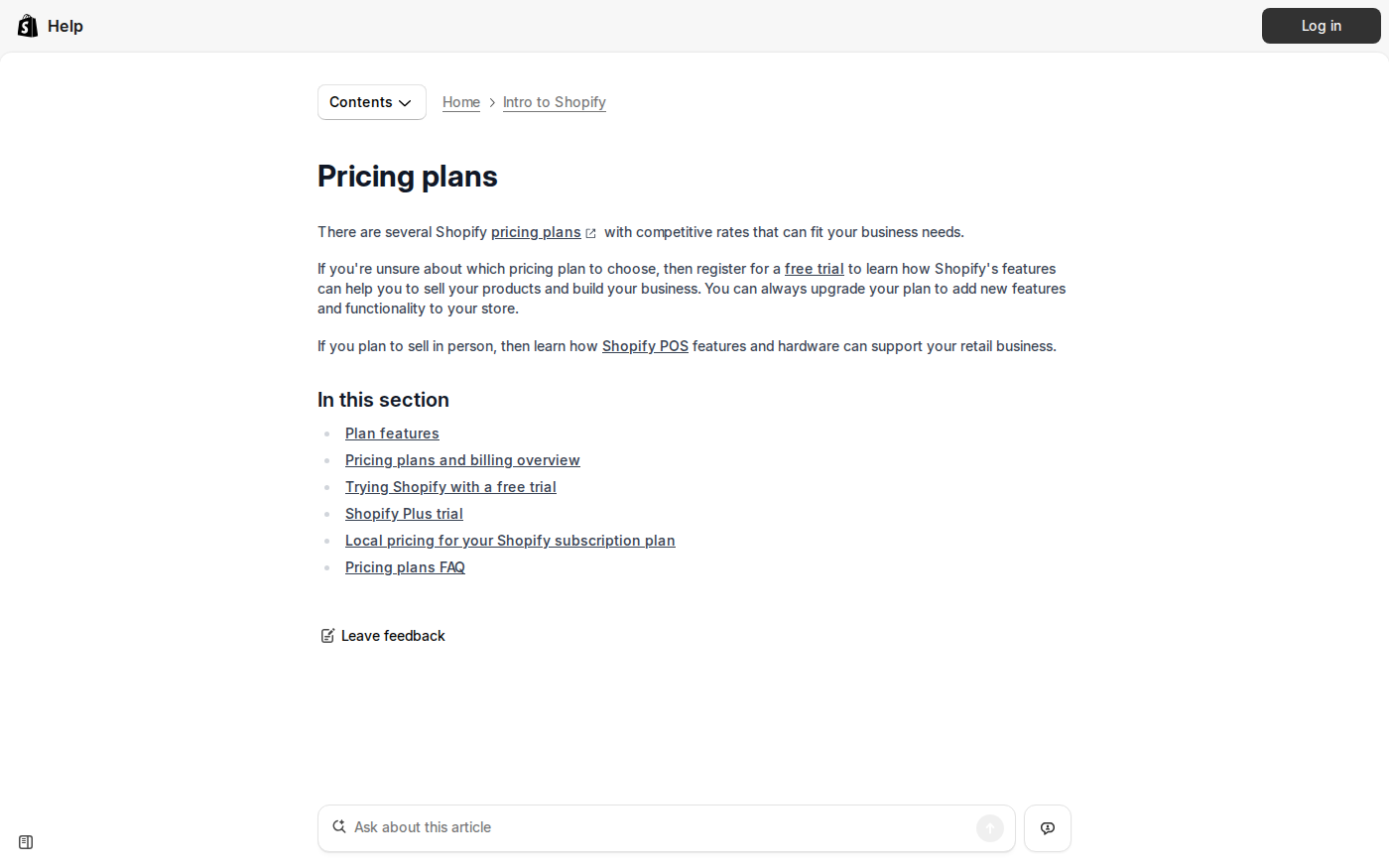
Shopify's official pricing plans — Authoritative source for current platform pricing
Source: help.shopify.com · Captured: Apr 2, 2026
Developer Hourly Rates: What to Expect in 2026
Shopify developer rates vary significantly based on experience, location, and specialization.
Hourly rates and complete projects cost between $25/hr to $200/hr based on complexity, integrations, and structure, with substantial regional differences affecting your budget.
Freelancer Rates by Experience Level
Experience directly correlates with both speed and quality of delivery.
Highly experienced developers may charge more, but they often complete tasks faster and deliver better results.
Experience Level
Hourly Rate
Typical Projects
Junior (1-2 years)
$25-50
Theme tweaks, basic customization
Mid-level (3-5 years)
$50-100
Custom features, app integrations
Senior (5+ years)
$100-150
Complex builds, performance optimization
Expert/Specialist
$150-200+
Headless, enterprise solutions
Hourly rates for Shopify experts typically range from $50 to $150 per hour, depending on their experience and location, though these ranges continue expanding at both ends of the spectrum.
Agency vs Independent Developer Pricing
Agencies typically charge premium rates but offer comprehensive teams and project management.
Agencies typically charge higher rates because they offer a full team that may include designers, developers, and project managers, often chosen for large or complex projects requiring multiple specialists.
Location also differs in cost to hire a Shopify developer. For example, hiring an expert in the USA might cost higher compared to hiring one in India.
Region
Rate Range
Notes
North America
$75-200/hr
Highest rates, local communication
Western Europe
$60-150/hr
Quality standards, timezone benefits
Eastern Europe
$40-100/hr
Good quality/cost balance
Asia (India, Philippines)
$15-50/hr
Most cost-effective option
Dedicated offshore developers cost $3,000-6,000/month for full-time engagement, often providing better value than hourly arrangements for ongoing projects.
Demand for Shopify experts worldwide is constantly growing, with hourly rates increasing particularly for Shopify Plus and headless commerce specialists.
Specialized skills and their premiums:
Shopify Plus: +25-50% premium
Headless/JAMstack: +40-75% premium
Performance optimization: +20-40% premium
Advanced integrations: +30-60% premium
"The knowledge of the Shopify developer cost breakdown by 2026 assists companies in making feasible budgets and preventing unforeseen costs." - CartCoders development guide
Baymard Institute's UX research — Industry-leading ecommerce UX research and cost optimization insights
Source: baymard.com · Captured: Apr 2, 2026
Platform Fees and Subscription Costs
Shopify's pricing structure forms the foundation of your total cost of ownership.
Platform pricing is designed to scale with your business, with upgrading becoming worthwhile when cost savings, efficiency gains or revenue opportunities exceed the increase in monthly subscription fees.
Plans start at $29/month for the Basic plan on annual commitment and go up to $2,500/month for Shopify Plus, with subscription prices changing based on monthly vs annual payment.
Plan
Monthly Cost
Annual Cost
Transaction Fees
Best For
Starter
$5
$60
5% + 30¢
Social selling only
Basic
$39
$348
2.9% + 30¢
New businesses
Grow
$105
$948
2.7% + 30¢
Growing stores
Advanced
$399
$3,588
2.4% + 30¢
High-volume stores
Plus
$2,300+
$27,600+
0.2% + variable
Enterprise level
Paying annually gives about a 25% discount on Basic, Grow, and Advanced plans, with the Basic plan dropping from $39/month to ~$29/month when billed annually.
Transaction Fees Impact
Transaction fees significantly impact your total costs as volume grows.
Third-party payment provider fees apply at 2% for Basic, 1% for Grow, and 0.6% for Advanced plans, with Shopify charging small fees for major credit cards that vary by plan.
Shopify Plus operates on variable pricing beyond the base platform fee.
Plus starts at $2,300 per month, but real costs are rarely that simple. For $1 million annual revenue, actual monthly bills likely reach $5,000-$8,000 factoring in transaction fees, apps, and custom development.
Plus pricing includes:
Base platform fee: $2,300-2,500/month
Revenue-based scaling: 0.35-0.40% of sales over $800k monthly
Lower transaction fees: 0.2% vs 0.6% on Advanced
Dedicated support and features
Plus makes financial sense when processing around $500,000-$800,000 per month in sales, where savings from lower transaction fees start offsetting the higher platform cost.
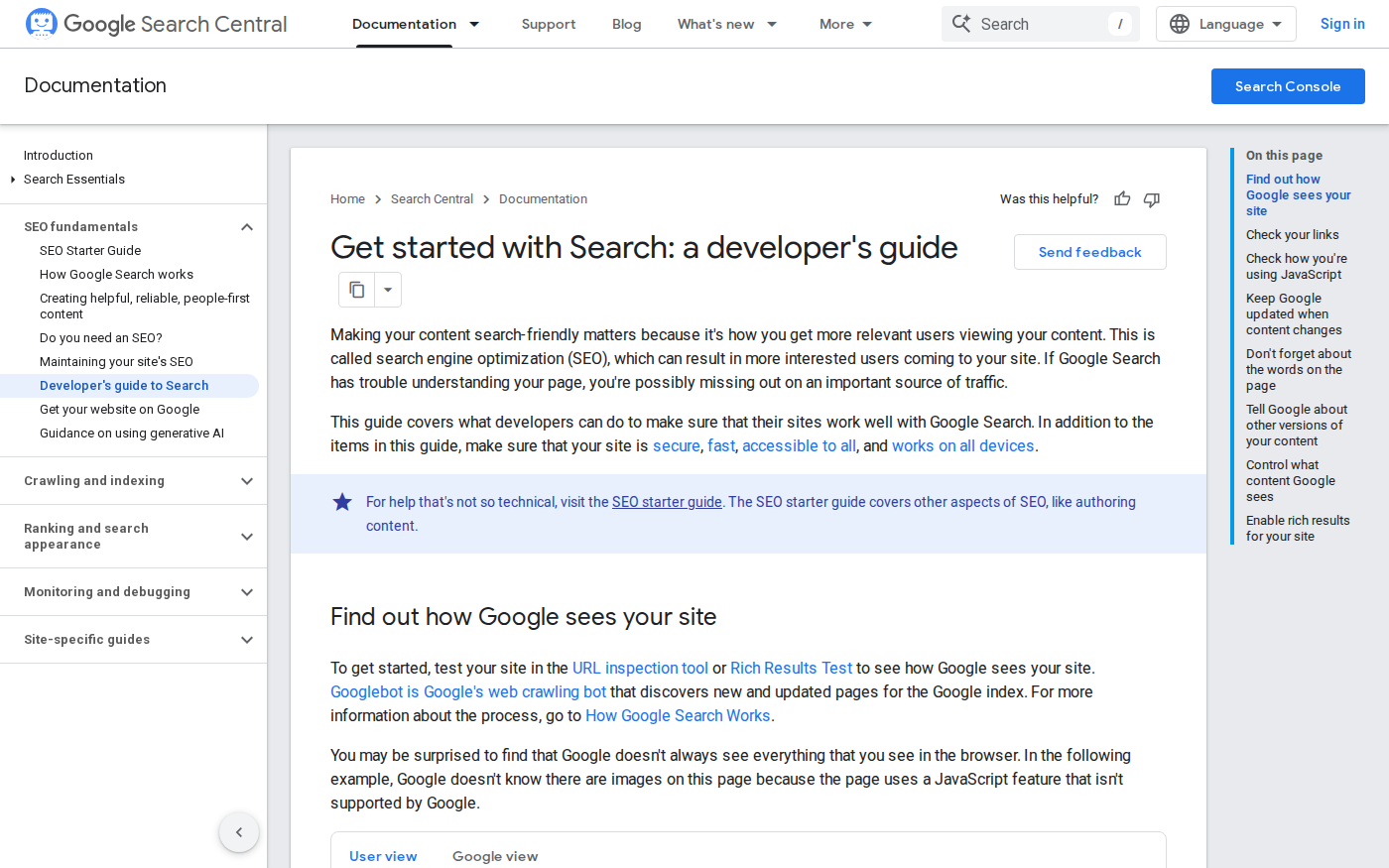
Google's SEO guide for developers — Technical SEO requirements that impact development costs
Source: developers.google.com · Captured: Apr 2, 2026
Hidden Costs That Inflate Your Budget
Many businesses underestimate the total cost of ownership by 40-60%.
Store owners underestimate the total cost of Shopify maintenance, with hidden expenses including custom development fees and third-party app subscriptions that accumulate over time.
Essential App Subscriptions
App costs scale rapidly as your store grows.
Monthly app costs for Shopify stores generally range from $50 to $500 or more, with launch-stage stores staying under $100/month while growth-stage stores often move into the $300–$500+ range.
App Category
Cost Range
Examples
Email marketing
$20-300/month
Klaviyo, Mailchimp
Reviews/social proof
$15-100/month
Yotpo, Judge.me
Inventory management
$50-500/month
TradeGecko, Cin7
Analytics/tracking
$25-200/month
Triple Whale, Northbeam
Customer support
$20-150/month
Gorgias, Zendesk
The average Shopify Plus store runs 15-20 apps, with mid-size stores easily spending $1,000-3,000/month on apps alone.
Theme and Design Costs
Premium themes and custom design work represent significant upfront investments.
Plus stores don't include premium themes, with Theme Store options running $250-400 as one-time purchases, while fully custom themes built by agencies can cost $15,000-50,000+ depending on complexity.
Design cost factors:
Premium themes: $250-400 one-time
Theme customization: $1,000-5,000
Custom design: $5,000-25,000
Brand development: $2,000-10,000
Maintenance and Updates
Ongoing maintenance costs often surprise store owners.
Expect to allocate 15-20% of initial development cost annually for maintenance, updates, and API compliance, translating to $375-500 per month for a mid-level app costing $30,000.
Data migration and setup costs vary dramatically based on your existing systems.
Large migrations from Magento, SAP Commerce, or Salesforce Commerce can cost $30k–$200k+ just for data transfer and setup due to extensive QA and SEO work requirements.
Migration complexity factors:
Simple CSV imports: $500-2,000
Basic platform migration: $2,000-8,000
Complex enterprise migration: $15,000-50,000
SEO preservation: $3,000-15,000
"Without regular maintenance, stores risk downtime, slow load speeds, and lost revenue, often creating more cost than proactive support." - WeDoWebApps development guide
Factors That Drive Shopify Development Costs
Project complexity serves as the primary cost driver in Shopify development. Understanding these factors helps you make informed decisions about features, timeline, and budget allocation.
Project Complexity and Custom Features
Custom functionality requirements exponentially increase development time and costs.
Simple tasks like small theme edits cost less, while advanced custom development requires more time and expertise. Features like product customizers, advanced filtering systems, or unique checkout experiences can increase development costs.
Complexity levels and their impact:
Complexity Level
Features
Cost Multiplier
Simple
Basic customization, standard features
1x baseline
Moderate
Custom product pages, advanced search
2-3x baseline
Complex
Multi-vendor, subscription models
4-6x baseline
Advanced
Headless architecture, custom APIs
8-12x baseline
Integration Requirements
Third-party integrations represent major cost variables.
Typical integration costs range $500-$6,000 per integration, with ERP or logistics integrations often exceeding $8,000+ due to authentication, data syncing, and automation rules.
Common integration types and costs:
Payment gateways: $500-2,000
Shipping providers: $1,000-3,000
ERP systems: $5,000-15,000
PIM/inventory management: $3,000-10,000
CRM platforms: $2,000-8,000
Connecting Shopify Plus to operational systems can be a big budget line, with each integration being a mini-project that can easily add tens of thousands in development costs.
Design Complexity
Visual design requirements significantly impact development time and costs. Custom design work requires both creative expertise and technical implementation skills.
Design complexity factors:
Template modification: $500-2,000
Custom responsive design: $3,000-10,000
Advanced animations/interactions: $2,000-8,000
Multi-brand/white-label design: $5,000-20,000
Timeline and Urgency
Accelerated timelines increase costs through resource allocation and potential overtime. Rush projects typically add 25-50% premium to standard development rates.
Timeline impact factors:
Standard timeline: Baseline pricing
Accelerated (50% faster): +25-35% premium
Rush (immediate need): +50-75% premium
Emergency fixes: +100-200% premium
Geographic Location
Developer location affects both hourly rates and project management overhead.
Regional pricing varies due to labor costs, availability of expertise, and project management maturity.
Location considerations:
Communication timezone overlap
Language and cultural alignment
Quality standards and processes
Legal and contract considerations
DIY vs Professional Development: Cost-Benefit Analysis
The decision between self-development and professional services involves multiple cost factors beyond initial price.
Store owners face choices between managing maintenance themselves or hiring professional services, with each approach having distinct pros and cons.
When DIY Makes Sense
DIY development works best for simple stores with limited customization needs.
Most merchants start by customizing their stores themselves using Shopify's built-in theme editor and free apps—and for good reason.
DIY is appropriate when:
Budget under $5,000
Simple product catalog
Standard business model
Time available for learning
Technical team member exists
Cost breakdown for DIY approach:
Platform subscription: $39-399/month
Premium theme: $250-400 one-time
Learning curve time: 40-120 hours
Trial and error costs: $500-2,000
Hidden Costs of Self-Development
DIY development often includes invisible costs that inflate total investment. Time opportunity cost and potential mistakes can exceed professional development savings.
Hidden DIY costs include:
Learning curve time investment
Mistakes requiring professional fixes
Performance optimization knowledge gaps
Security vulnerability risks
Ongoing maintenance complexity
If your app could generate $50k/month, a 6-month delay costs $300,000 in lost revenue—an "invisible" cost that hits your bottom line just as hard as development fees.
ROI of Professional Development
Professional development typically delivers faster time-to-market and higher conversion rates.
Speed improvements can increase conversion rates by 15–25%, often justifying higher upfront costs.
Many successful businesses combine DIY and professional elements. This approach balances cost control with professional quality.
Hybrid strategies include:
Professional setup + DIY maintenance
DIY launch + professional optimization
Professional design + DIY content
Professional development + internal marketing
Approach
Upfront Cost
Monthly Cost
Best For
Full DIY
$1,000-3,000
$100-300
Very small businesses
Hybrid
$3,000-8,000
$200-500
Growing businesses
Full Professional
$8,000-25,000+
$500-2,000+
Established businesses
2026 Market Changes Affecting Costs
The Shopify development market continues evolving with new technologies and changing demand patterns.
Shopify developer hourly rates have become less simple for 2026 budgets, with decision-makers wanting to understand actual end-to-end costs including hourly rates, project prices, infrastructure choices, and long-term maintenance.
Impact of AI Development Tools
Artificial Intelligence tools are transforming development efficiency and cost structures.
AI-driven QA tools identify bugs faster and more accurately, significantly reducing quality assurance and post-launch maintenance costs, while AI simplifies complex system integration by automating data mapping.
AI impact on development:
Code generation reducing development time by 20-30%
Recent Shopify platform updates introduce new development possibilities and costs.
Checkout extensibility is a major factor in 2026 developer costs, with many brands needing to migrate from deprecated Shopify Scripts to Shopify Functions, increasing development costs.
2026 platform changes affecting costs:
Shopify Functions migration requirements
Enhanced checkout extensibility options
Improved API rate limits and capabilities
New B2B and multi-store features
Post-Pandemic Market Shifts
The ecommerce boom has permanently altered the development landscape. Increased demand for sophisticated online experiences drives both opportunity and cost complexity.
Market shift impacts:
Higher baseline expectations for UX/UI
Increased focus on mobile optimization
Greater emphasis on performance and speed
Enhanced security and compliance requirements
Skills Shortage Effects on Rates
The growing demand for Shopify expertise outpaces available talent supply. This imbalance continues pushing rates higher across all experience levels.
Skill shortage impacts:
15-25% annual rate increases for specialists
Longer project timelines due to resource constraints
Premium rates for proven track records
Increased competition for quality developers
"Maintenance directly influences revenue, customer trust, and search engine performance. Shopify maintenance is evolving rapidly. In 2026, online stores must adapt to new technologies, customer expectations, and e-commerce best practices." - Abbacus Technologies maintenance guide
How to Get Accurate Quotes and Avoid Budget Overruns
Getting reliable development quotes requires specific preparation and vendor evaluation strategies.Transparent pricing model discussions should include detailed scope definitions and clear deliverable expectations.
Questions to Ask Potential Developers
Thorough vendor evaluation prevents costly misunderstandings and scope creep. Ask these essential questions before signing any development agreement:
Technical capability questions:
What's your experience with similar project complexity?
Can you provide references from recent Shopify projects?
How do you handle Shopify platform updates and API changes?
What's your approach to performance optimization?
How do you ensure mobile responsiveness and accessibility?
Process and communication questions:
What project management methodology do you use?
How frequently will you provide progress updates?
What happens if project scope changes mid-development?
How do you handle testing and quality assurance?
What post-launch support do you provide?
Red Flags in Pricing Proposals
Certain proposal characteristics indicate potential problems or hidden costs. Watch for these warning signs when evaluating development quotes:
Pricing red flags:
Significantly lower quotes than market average
Vague scope definitions or deliverables
No mention of testing or QA processes
Absence of revision or change request policies
Unrealistic timeline promises
No ongoing maintenance discussion
Common hidden costs for ecommerce sites include app subscriptions, transaction fees, marketing spend, fulfillment expenses, and returns processing, with ongoing costs typically growing as stores scale and potentially exceeding base platform prices.
Scope Definition Best Practices
Clear scope definition prevents budget overruns and timeline delays. Use this checklist to ensure comprehensive project documentation:
Scope Category
Required Details
Design
Wireframes, style guide, responsive breakpoints
Functionality
Feature specifications, user stories, acceptance criteria
Integrations
API documentation, data mapping, authentication methods
Content
Migration requirements, SEO preservation, media optimization
"Smart operators conduct periodic audits to eliminate redundancy and prioritize multi-functional solutions built for long-term scalability." - Ecommerce Development Pros cost guide
Cost Optimization Strategies for 2026
Strategic cost optimization balances immediate savings with long-term scalability needs.Shopify speed optimization and performance improvements often provide better ROI than feature additions.
Phased Development Approach
Breaking development into phases spreads costs and validates assumptions before major investments. This approach reduces risk and allows for course corrections based on real user feedback.
Recommended phase structure:
Phase
Focus
Investment
Timeline
Phase 1
MVP launch, core features
40% of budget
4-6 weeks
Phase 2
Optimization, initial growth
35% of budget
6-8 weeks
Phase 3
Advanced features, scaling
25% of budget
8-12 weeks
Smart teams plan for an additional 10–20% of development budget for post-launch iteration including conversion improvements, seasonal updates, and new feature releases.
Choosing the Right Plan Level
Platform plan selection significantly impacts long-term costs.
Break-even math shows that processing $500,000/month with 0.4% transaction fee difference between Advanced (0.6%) and Plus (0.2%) saves $2,000/month.
Plan optimization factors:
Current transaction volume and growth projections
Required features and functionality needs
Integration complexity and API requirements
Support level and response time needs
App Selection Strategy
Strategic app selection prevents subscription bloat and reduces technical debt. Focus on multi-functional solutions and native Shopify features before adding specialized apps.
Successful cost optimization requires 3-5 year planning horizons. Consider total cost of ownership including platform fees, development, and operational expenses.
Long-term planning considerations:
Platform migration costs and vendor lock-in
Scalability thresholds and upgrade requirements
Competitive differentiation through custom features
Team skill development and internal capabilities
Cost optimization best practices:
Regular performance and cost audits
Benchmark against industry standards
Invest in performance over features
Plan for platform evolution and updates
Build internal capabilities over time
Based on Baymard Institute's UX research, strategic optimization focusing on conversion rate improvements often provides better ROI than feature additions, particularly for established stores.
Ready to Build Your Shopify Store Without Budget Surprises?
Skip the guesswork and get accurate development quotes from Shopify experts. Krish's on-demand Shopify development service provides transparent pricing, fixed-scope deliverables, and no hidden fees. See exactly what your Shopify project will cost before you commit, and start with a free month to experience predictable how much does Shopify development cost solutions that scale with your business.
Additional Reference Tables
Execution Priority Matrix for how much does Shopify development cost
Task type
Impact on growth
Effort level
Recommended sequence
Revenue blockers
High
Medium
Resolve first
Conversion UX fixes
High
Medium
Ship next
Design polish items
Medium
Low
Bundle weekly
Experimental ideas
Variable
High
Test after core fixes
Quality Assurance Checklist for how much does Shopify development cost
Checkpoint
Why it matters
Owner
Done when
Mobile QA
Most traffic is mobile-first
Developer + marketer
No layout or tap issues
Performance checks
Speed impacts conversion and SEO
Developer
Core templates pass audits
Tracking validation
Attribution affects decisions
Marketing ops
Events match expected counts
Rollback readiness
Reduces launch risk
Store owner
Previous version can be restored quickly
Measurement Plan for how much does Shopify development cost
Metric
Leading indicator
Review cadence
Action trigger
Conversion rate
Add-to-cart rate
Weekly
Drop >10% week-over-week
Speed health
LCP and CLS trend
After each release
Any regression from baseline
Merchandising quality
PDP engagement depth
Weekly
High bounce on key pages
Revenue outcome
AOV and revenue/session
Bi-weekly
No uplift after two test cycles
FAQ: how much does Shopify development cost
How much does a basic Shopify store cost?
A basic Shopify store costs $500-$2,000 for DIY setup including platform subscription, premium theme, essential apps, and basic customization. Professional basic setups range from $2,000-$5,000.
What's the difference between DIY and professional Shopify development?
DIY development requires 40-120 hours of learning and setup time, costing $1,000-$3,000 total. Professional development costs $8,000-$25,000+ but delivers faster launches, higher conversion rates, and ongoing support.
How much do Shopify developers charge per hour?
Shopify developers charge $25-$200 per hour depending on experience and location. Junior developers cost $25-$50/hr, mid-level $50-$100/hr, senior $100-$150/hr, and specialists $150-$200+/hr.
What are the hidden costs of Shopify development?
Hidden costs include app subscriptions ($50-$500/month), maintenance (15-20% of development cost annually), transaction fees, premium themes ($250-$400), and integration expenses ($500-$6,000 each).
Is Shopify development more expensive than other platforms?
Shopify's total cost of ownership is often competitive due to included hosting, security, and updates. While initial costs may be higher, ongoing operational expenses are typically lower than custom solutions requiring separate hosting and maintenance.
Summary
Shopify development costs in 2026 span a wide spectrum from $500 DIY setups to $150,000+ enterprise solutions, with most professional projects falling between $8,000-$25,000. Developer hourly rates range from $25-$200 based on experience and specialization, while hidden costs including apps, maintenance, and integrations can double your initial budget.
Key cost factors include project complexity, required integrations, design customization, timeline urgency, and geographic location. The choice between DIY and professional development involves trade-offs between upfront costs and long-term performance, with professional development typically delivering faster launches and higher conversion rates.
Platform fees start at $39/month for basic plans and scale to $2,300+ for Shopify Plus, with transaction fees adding 0.2-2.9% of sales. Hidden costs like app subscriptions ($50-$500/month), annual maintenance (15-20% of development cost), and integration expenses ($500-$6,000 each) significantly impact total cost of ownership.
Strategic cost optimization requires phased development approaches, careful app selection, and long-term planning. The 2026 market shows continued rate increases driven by skills shortages and new platform features, making accurate scoping and vendor selection critical for budget control.